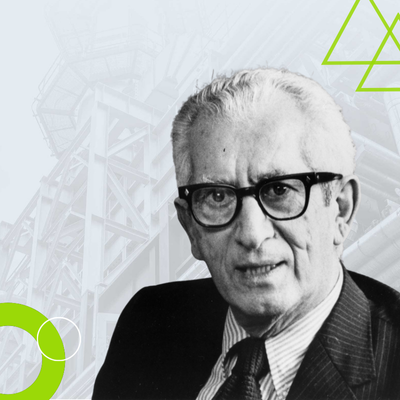
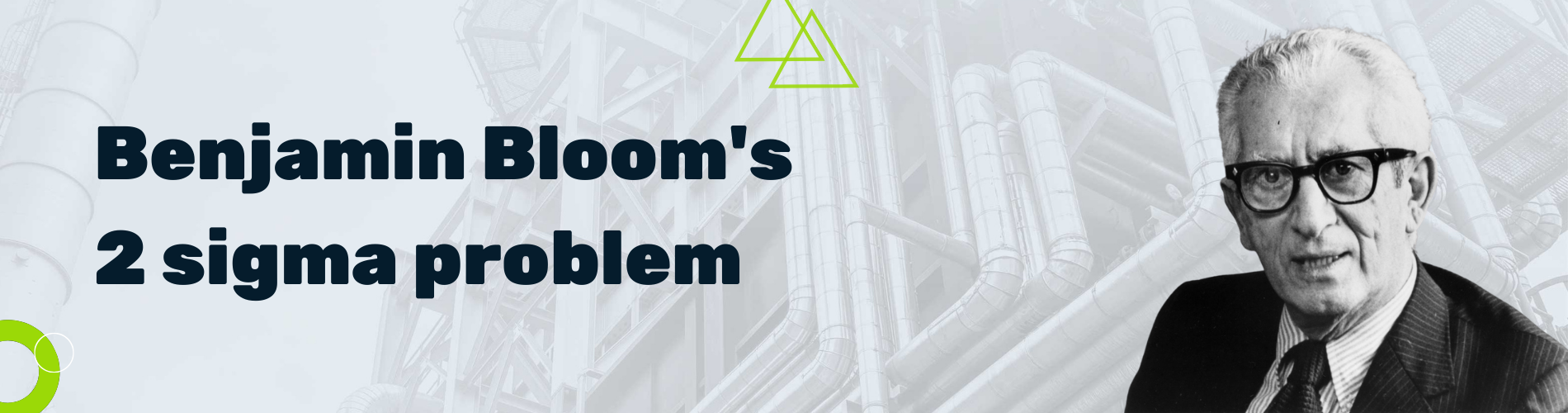
In 1984, educational psychologist Benjamin Bloom published groundbreaking research that compared different ways of teaching and learning. Analyzing studies conducted by his PhD students at the University of Chicago, he discovered that students who received one-on-one tutoring performed, on average, better than 98% of students in a traditional classroom.
About the study
Bloom tested three main approaches:
1. Traditional Classroom Teaching (Baseline)
- Regular group instruction
- Same pace for all students
- Limited individual feedback
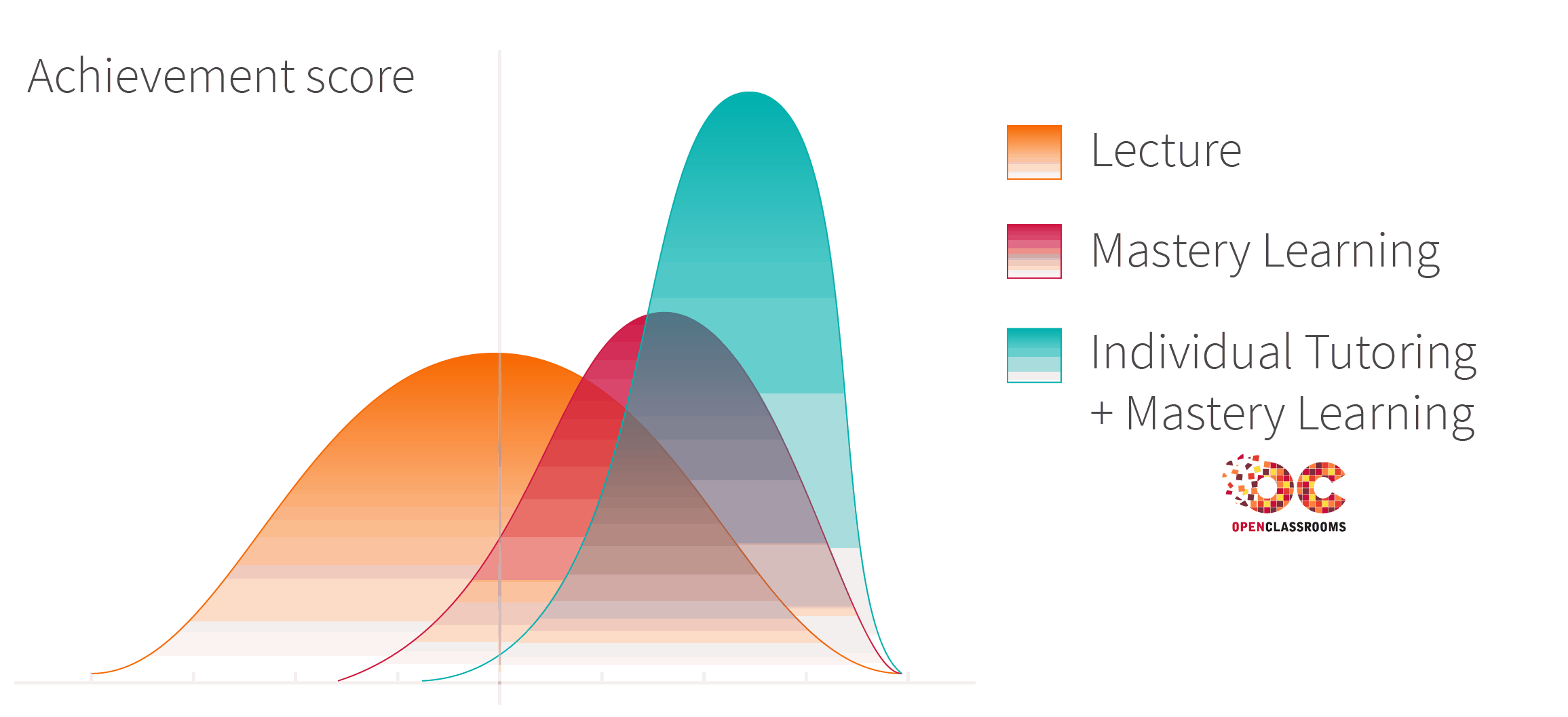
2. Mastery Learning in Groups
- Students had to master each topic before moving on
- Regular testing and feedback
- More time given when needed
- This boosted results by about one standard deviation—better than traditional, but not as strong as tutoring.
3. One-on-One Tutoring with Mastery Learning
- Individual tutoring sessions
- Students couldn’t advance until they truly understood the material
- Immediate, personalized feedback
- Learning at the student’s own pace
- This produced the dramatic “two sigma” effect
Why One-on-One Tutoring Works So Well
Bloom identified several key factors that made individual tutoring so powerful:
- Personalized pacing: Students learn at their own speed
- Mastery based Learning: Students had to demonstrate complete understanding before advancing to next topic.
- Immediate feedback: Mistakes corrected instantly, preventing students from practicing errors.
- Repetition & practice: Students could repeat difficult concepts as many times as needed without holding back a class
- Individual Attention: Tutor could adapt teaching methods to each student’s needs.
The Challenge: Bloom’s “Problem”
The results were clear: most learners could achieve much higher performance given the right conditions. But the challenge, of course, is scale. Providing one-on-one tutoring to every student is costly and resource-intensive. Bloom called this the “Two Sigma Problem”: How do we bring the effectiveness of tutoring into a group learning environment?
Why This Matters Today
Four decades later, Bloom’s challenge remains. In manufacturing and field operations, traditional training methods often move too quickly, rely on a a handful of experts, or leave gaps in understanding—undermining safety, efficiency, and productivity.
This is why Bloom’s research remains so relevant today: It reminds us that most learners can achieve far more than traditional training methods suggest. The real difference isn’t student ability, it’s the learning conditions.
How Voovio Solves the Two Sigma Problem
This is where modern learning tools make the difference. Voovio’s simulators replicate the conditions that made one-on-one tutoring so powerful, without requiring one-on-one trainers for every operator.
- Individual pace: Operators progress at their own speed, never rushed or left behind.
- Mastery-based progression: They must demonstrate understanding before moving on.
- Immediate feedback: Mistakes are shown and corrected instantly in the simulator, not in the plant.
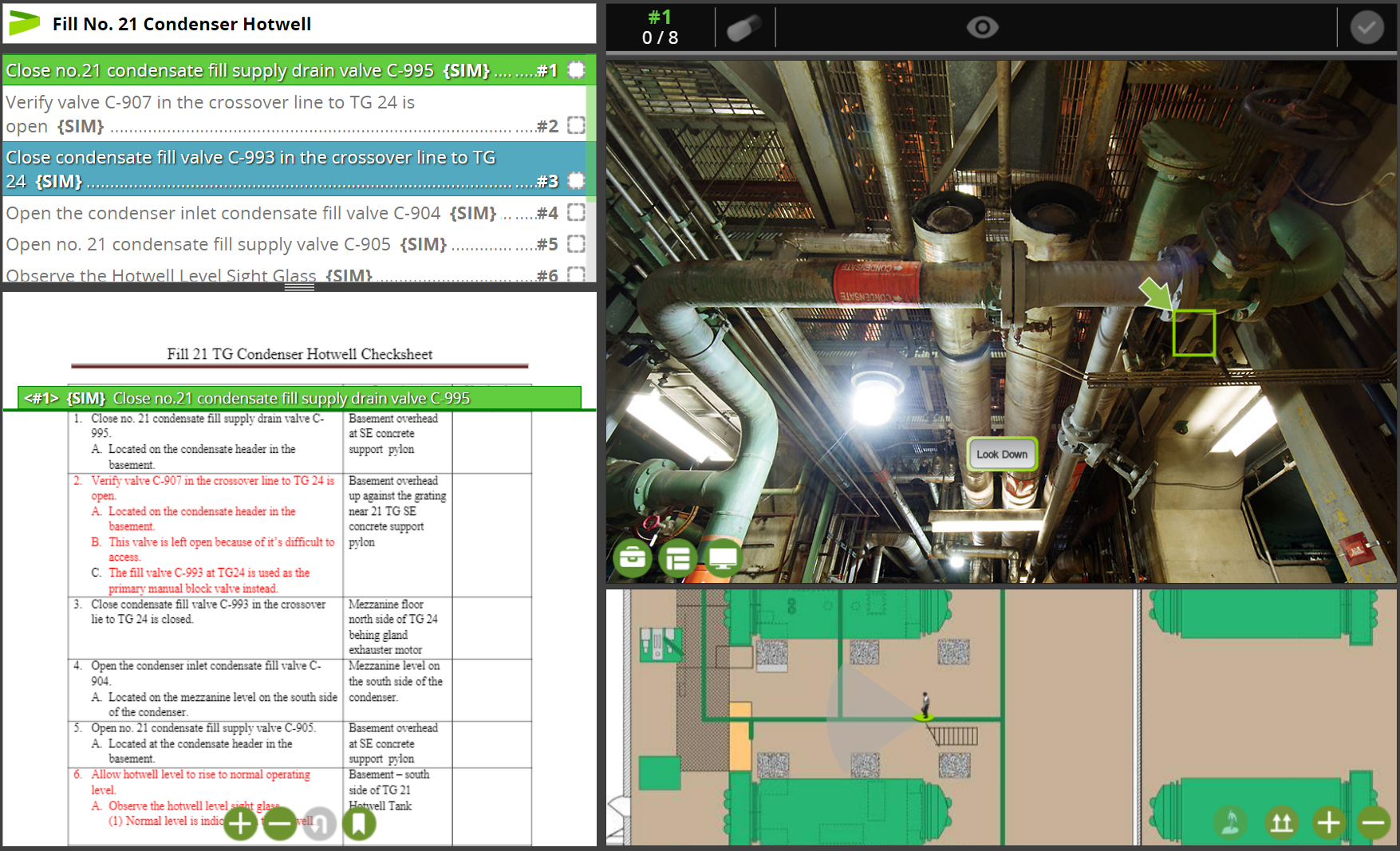
- Repetition without cost: Practice complex procedures as often as needed, with no downtime or safety risk.
- Personalized learning: Each operator gets a tailored experience without requiring one-on-one trainer time.
The impact is clear. Customers using Voovio report:
- Dramatically accelerate training time while reducing burden on SMEs
- Reduced reliance on tribal knowledge and outdated paper-based SOPs
- Greater confidence and consistency among operators executing critical tasks
- Measurable competency among operators leading to fewer incidents
Industry leaders such as Dow, BASF, SABIC, and Tesla, and many more have adopted Voovio to scale effective training across their workforces.
The Future of Field Training is Here
Bloom showed that learners can achieve much higher performance when given the right learning conditions. The challenge was always scalability, how to provide individualized, mastery-based learning to entire workforces. This is what Voovio makes possible. With our simulators, organizations can create the same conditions that drove Bloom’s “two sigma” improvement at scale, in real industrial environments, improving safety, reducing downtime, and unlocking the full potential of their workforce.
Ready to transform your field training? Learn how Voovio can help your team achieve the Two Sigma advantage. Contact us to schedule a demo.