

The manufacturing industry finds itself at a critical crossroads in 2025. With geopolitical tensions reaching unprecedented levels and uncertainty stalling strategic decision-making across the sector, manufacturers are grappling with challenges that threaten their operational foundations. According to a recent study by the Manufacturers Alliance, 90% of manufacturers report that geopolitical risk is stalling strategic development, creating a climate where traditional approaches to growth and investment are being fundamentally questioned.
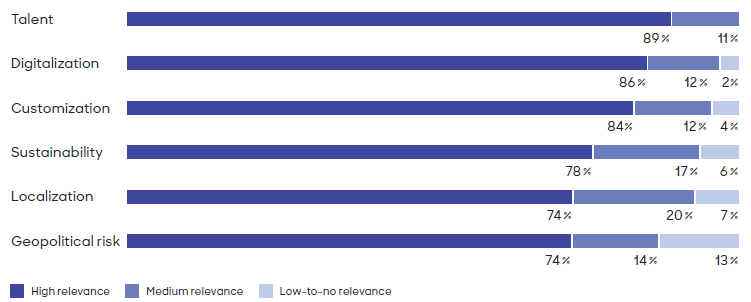
Yet beneath trade tensions and tariff uncertainties lies a more pressing, structural challenge that will determine the industry’s future: the acute shortage of skilled talent. Among all current manufacturing trends, talent shortage leads as the highest priority concern for 89% of manufacturers, closely followed by digitalization at 86%—a clear indication that these two challenges are inextricably linked. This crisis, amplified by geopolitical instability and restrictive immigration policies, is forcing manufacturers to reimagine their operational strategies and accelerate their digital transformation like never before.
Highly Relevant Trends in Manufacturing Today
The Talent Shortage: A Crisis Amplified by Uncertainty
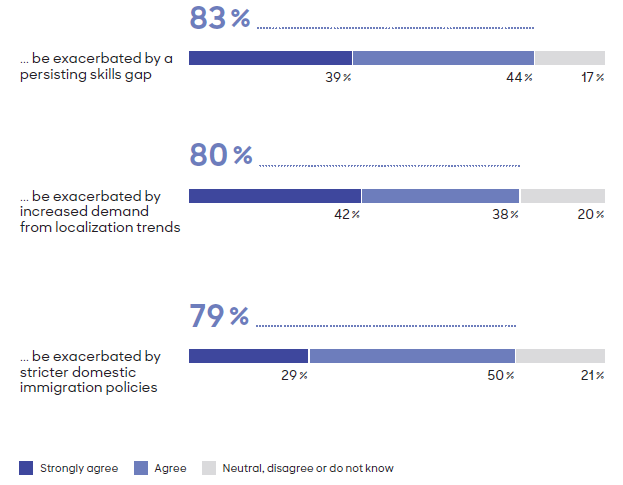
The manufacturing sector’s talent challenges have reached a critical moment. Currently, 64% of manufacturers report that skilled worker deficits are impacting their operations frequently or occasionally, but the situation is set to worsen dramatically. Over the next five years, 83% of industry leaders believe that geopolitical risk will exacerbate workforce challenges, while 80% expect increased demand from localization trends to intensify the competition for skilled workers, and 79% anticipate that stricter domestic immigration policies will further shrink the available talent pool. As manufacturers shift toward region-for-region production strategies to mitigate geopolitical risks, demand for skilled workers in developed markets is intensifying.
“This is going to be a huge problem with everyone trying to put factories up and fighting for the exact same people in business-friendly states,” warns one CEO of a manufacturing conglomerate. The challenge extends beyond competing with other manufacturers, companies now compete with retail and hospitality sectors for entry-level workers, while high turnover rates create endless cycles of onboarding, training, and retraining that drain resources and disrupt operational continuity.
Talent shortage expected to worsen in the next five years, the manufacturing labor shortage will…
Digitalization: Accelerating Under Pressure
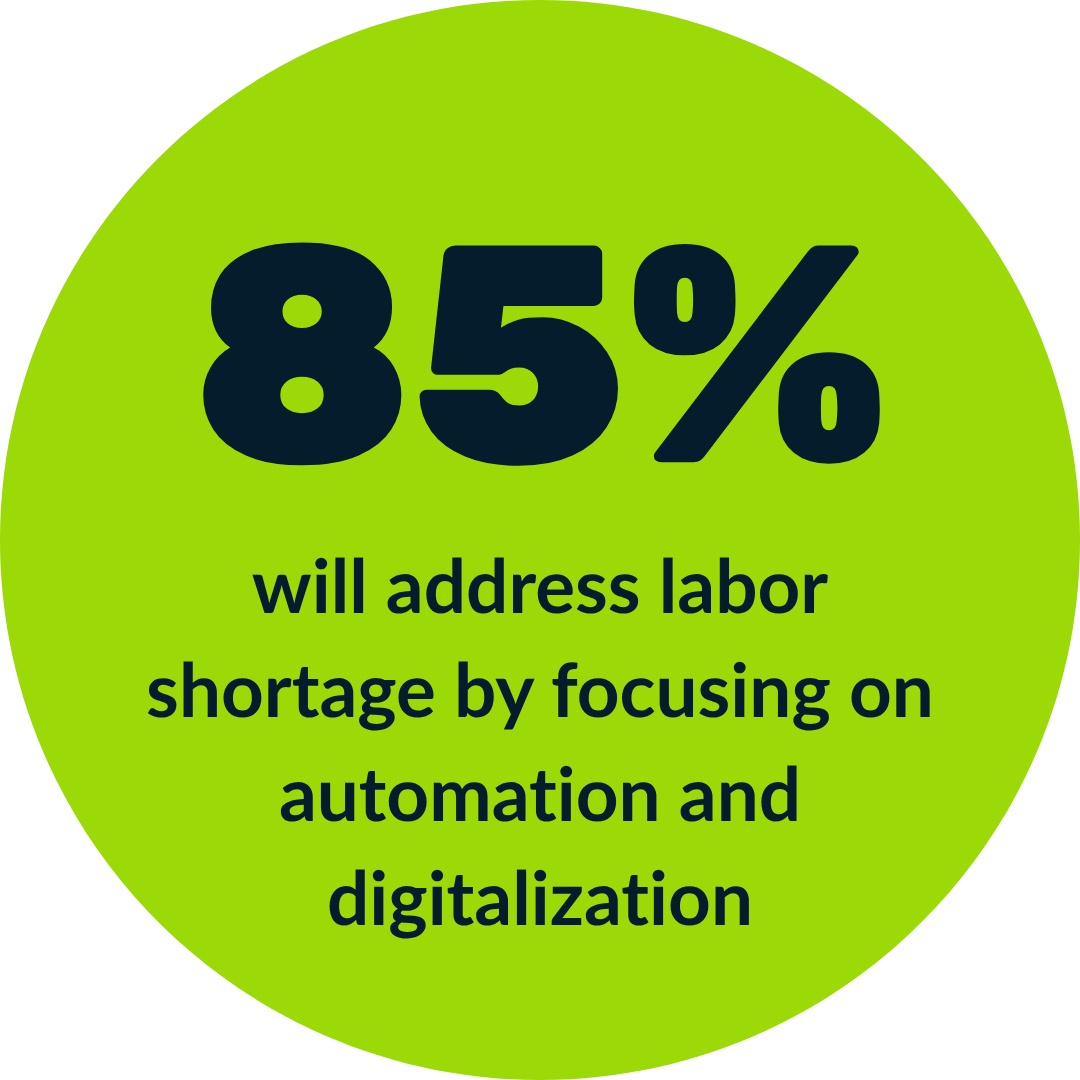
Faced with mounting talent pressures, manufacturers are turning to digitalization and automation as their primary strategic response. The numbers tell the story: 85% of manufacturers view digitalization and automation as durable solutions to the talent shortage, while 94% say the current geopolitical situation will significantly impact their digitalization strategies. Among industry leaders, three out of four are reaching for digital solutions to mitigate geopolitical risk.
Traditional ROI calculations for automation focused primarily on labor cost savings, but today’s manufacturers are adopting a more sophisticated approach. “At $22 an hour, it is difficult to justify automation based only on the cost of labor,” explains Christopher Griffin of USG. “But it’s different in an environment where we need to keep production running and cannot hire people to fill essential roles. Instead, we calculate margin loss in the event that we can’t run production for 24 hours.”
The most successful digitalization strategies focus on addressing critical bottlenecks in workforce development and knowledge transfer.
How Voovio addresses geopolitical uncertainty
In an environment where 83% of manufacturers expect workforce challenges to worsen and skilled trainers are becoming increasingly scarce, Voovio directly addresses the training bottleneck that limits how fast companies can scale their workforce to meet growing demand.
The pressures highlighted in the Manufacturers Alliance report of shrinking talent pools, high turnover, and the urgent push toward digitalization underscore the need for smarter, scalable solutions to train and retain skilled workers. This is where Voovio comes in.
Voovio’s Digital Replica and Procedure Simulations bridge the talent and technology gap by transforming how manufacturing teams acquire and retain skills. Instead of relying on passive training methods that struggle to keep pace with turnover and operational demands, Voovio enables:
- Interactive procedure practice – Operators can rehearse critical tasks in a realistic, risk-free environment until competency is achieved
- Knowledge capture and standardization – Best practices from experienced SMEs are preserved and transferred seamlessly to new operators, ensuring operational discipline.
- Free up skilled trainers and SMEs from repetitive training tasks to focus on higher-value activities
By combining workforce development with digital capability, Voovio helps manufacturers protect productivity, reduce training time, and future-proof operations—directly addressing the challenges of talent shortage and digitalization in today’s geopolitical uncertainty.
Want to find out more? Reach out to us today and learn how Voovio could help at your plant!