The refining, petrochemical, and gas industries are under increasing pressure to decarbonize, yet one of the most significant sources of avoidable emissions remains largely invisible: daily operational transients. Startups, shutdowns, equipment switching, purging, and valve alignments may seem routine, but they quietly account for 2.5 – 8% of a plant’s annual emissions while also wasting energy, triggering unreported flaring, and undermining operational stability. This “blind spot” in industrial decarbonization is not caused by failing equipment; it is driven by human variability in complex operations. And it is costing plants millions in lost uptime, energy waste, regulatory exposure, and avoidable CO₂ emissions every year.
The Challenge: Global Emissions Are Also an Operations Problem
When decarbonization is discussed in heavy industry, the focus is often on technologies like electrification, hydrogen, or carbon capture. But there is a major source of emissions that receives far less attention: how plants are operated day to day.
Refineries and petrochemical sites are some of the most energy-intensive assets in the world. Large compressors run at up to 20 MW, furnaces consume tens of megawatts of thermal energy, and flare systems constantly manage variable gas streams. On this scale, even small inefficiencies quickly become big emissions.
Emissions Peak During Transient Operations
The highest energy consumption and the greatest risk of flaring occur during operational transients – startups, shutdowns, switching, purging, and alignments. While these activities represent a fraction of operating time, they typically generate 2.5 – 8% of a plant’s annual emissions.
This happens because transients combine:
- Peak energy demand
- Higher risk of flaring
- Heavy reliance on human execution
Where Emissions Really Come From
Across industrial operations, the same problems appear again and again:
- Compressors suffer from misalignment and excessive recirculation, wasting energy and triggering venting.
- Pump systems experience cavitation, poor venting, or incorrect switching, leading to spills, trips, and flaring.
- Large process units like FCCs and hydrocrackers can emit 30 – 100 tons of CO₂ from a single failed startup.
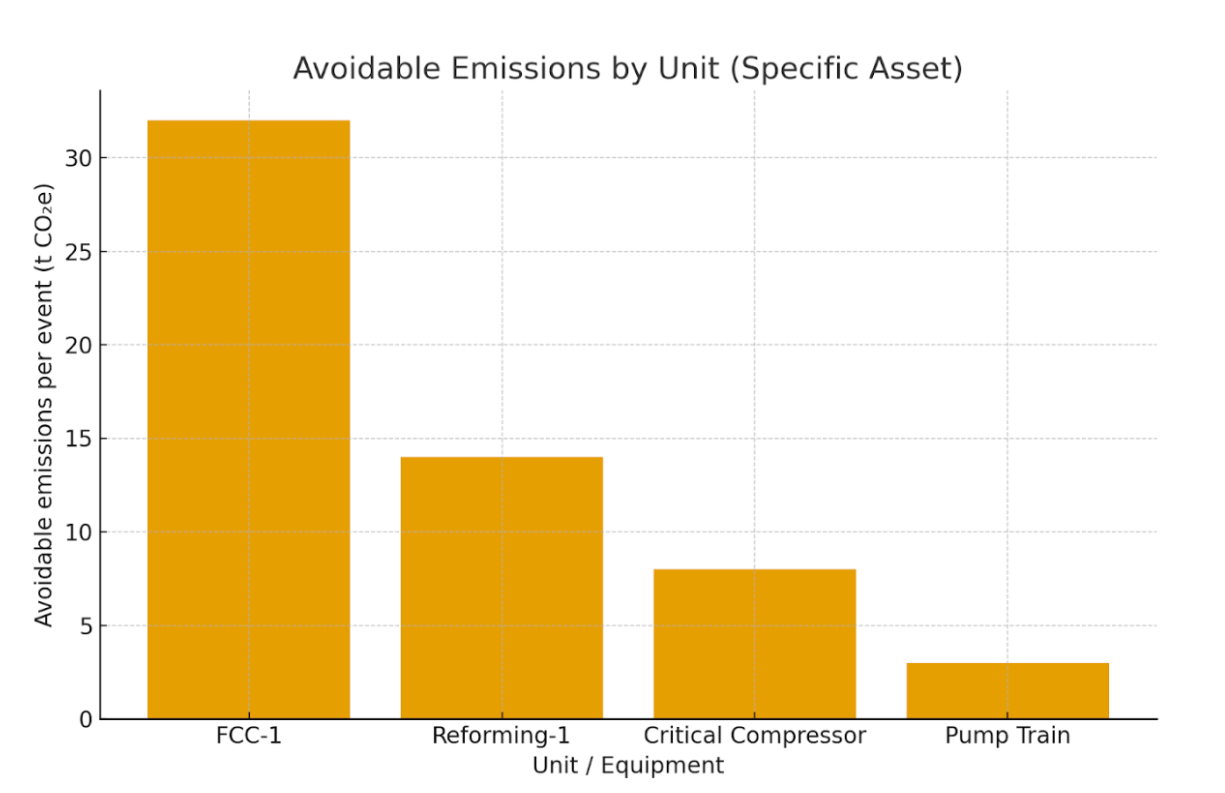
Figure 1: Avoidable emissions by unit
These are not edge cases – they are common operational failures.
The Industrial ESG Blind Spot
Transient emissions are rarely measured in detail, hard to predict, and even harder to manage. As a result, they often fall outside ESG reporting and decarbonization models entirely.
Yet in many plants, transients represent one of the largest sources of avoidable emissions and energy waste.
Solving Emissions at the Source: The Operator
Most emissions reduction programs focus on long-term transformation: new assets, new fuels, new infrastructure. These strategies matter but they are slow, complex, and capital intensive. Meanwhile, a significant share of industrial emissions is being generated every day through the way work is executed on the plant floor. This is where operational excellence becomes a climate strategy.
Across refineries and chemical plants, the same pattern repeats itself during startups, switching, and troubleshooting: procedures exist, but execution varies; experience is required, but experts are not always available; pressure is high, but visibility is limited. In this gap between design and execution, energy is wasted, flaring increases, and avoidable emissions are created.
This is where Voovio operates. Voovio standardizes transient procedures through step-by-step digital sequences and real visual identification in the field. Operators follow precise, visual guidance built from real plant images, turning day-to-day operation problems into an immediate and measurable opportunity to reduce emissions. By improving execution, Voovio turns everyday operational challenges into a measurable opportunity to cut emissions. The impact comes quickly, scales across plants, and requires no major investment, delivering strong climate and financial results per site:
Observed impact:
- 60–90% fewer startup failures
- 20–60% less avoidable flaring
- 25–55% lower energy waste during transients
- 0.5–1.5% increase in uptime
- Lower regulatory exposure tied to EPA, OSHA, and EU ETS compliance
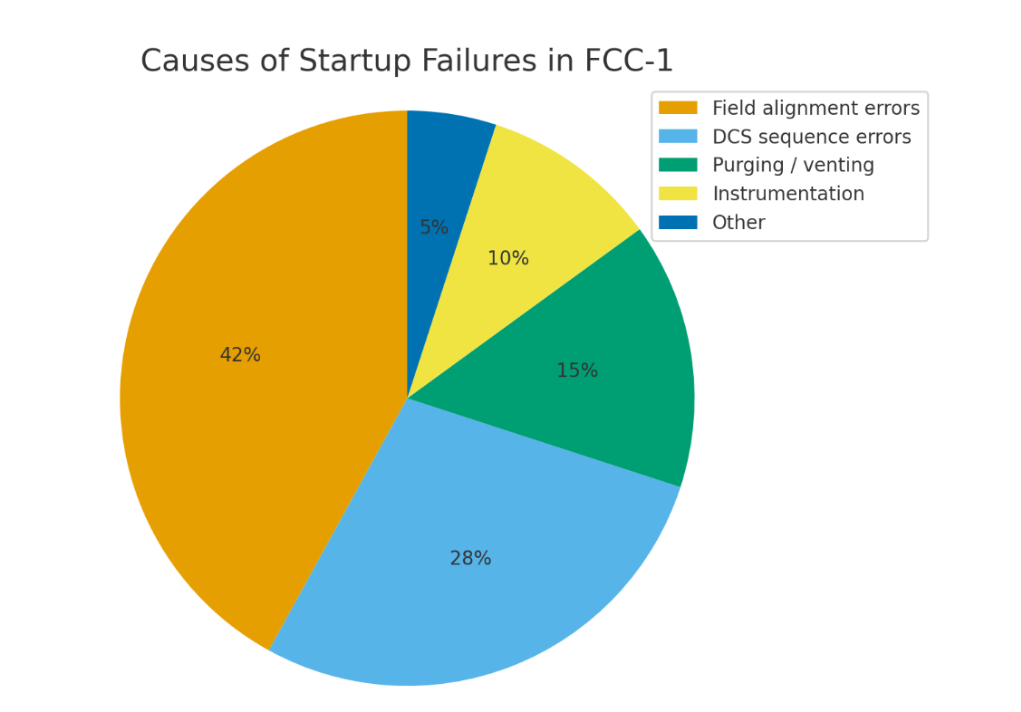
Figure 2: Causes of Startup Failures in FCC-1
Financial Impact Per Plant
- Energy savings: €100–300k/year
- Uptime gain: €0.3–4.5M/year
- Regulatory savings: €50–200k/year
- Flare cost reduction: €10–60k/year
Quantifiable Climate Impact
- 300–1,500 MWh avoided annually
- 150–700 tons CO₂e reduced per year, per plant
Case Study: A Petrochemical Producer – Geismar, Louisiana
The challenge:
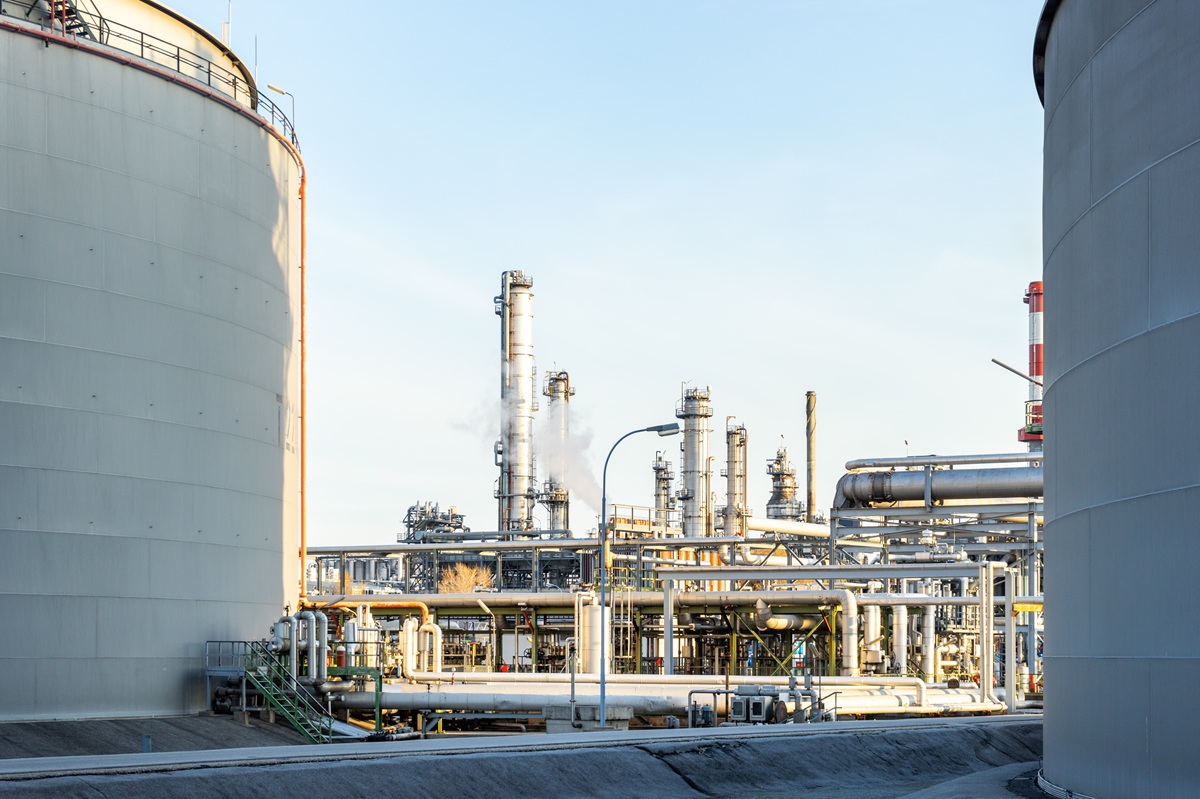
At a petrochemical producer, frequent startup deviations in large process units were generating unplanned flaring, excess energy consumption, and operational instability. The challenge was inconsistent execution of procedures during high-pressure transients.
The impact:
By standardizing and digitizing transient procedures with Voovio, the site dramatically reduced human variability during critical operations.
The Results:
- 70% reduction in startup failures
- 900–1,400 MWh of energy avoided per year
- 450–700 tons of CO₂ reduced annually
The improvement created immediate operational stability, measurable emissions reduction, and a clear financial return.
See more Case Studies here.
Decarbonization Starts in Daily Operations
Decarbonization is often treated as a long-term transformation challenge. But some of the biggest opportunities already exist on the plant floor, in how work is executed every day. Each failed startup, unnecessary flare, or repeated procedure is more than an operational issue. It is avoidable emissions, lost energy, and missed value.
For organizations serious about near-term impact, decarbonization doesn’t start with equipment, it starts with operations. More efficient operations can be one of the fastest ways to cut emissions while increasing reliability and performance.